

Femtosecond Laser


Femtosecond Laser

Femtosecond Laser
Femtosecond Laser
Femtosecond Laser

Excimer Lasers
Understanding Femtosecond Lasers in Ophthalmology
Femtosecond lasers have revolutionized ophthalmic procedures, offering unprecedented precision, speed, and safety. These lasers emit ultra-short pulses, measured in femtoseconds (one quadrillionth of a second), enabling high precision while minimizing thermal damage to surrounding tissues. Their applications span across refractive surgery, cataract surgery, and corneal transplantation, making them indispensable tools in modern ophthalmology.
How Femtosecond Lasers Work
Femtosecond lasers operate on the principle of photodisruption. The ultra-short pulses generate a plasma of ionized molecules within the target tissue, creating precise cuts or dissections without significant heat transfer. This mechanism ensures minimal collateral damage and high surgical accuracy. The laser’s ability to focus at different depths allows surgeons to perform procedures within the corneal layers, lens, or even deep stromal layers of the cornea.
Applications of Femtosecond Lasers in Ophthalmology
- Refractive Surgery (LASIK and SMILE): Femtosecond lasers are used to create corneal flaps in LASIK and lenticules in Small Incision Lenticule Extraction (SMILE). Their precision enhances outcomes and reduces complications such as flap irregularities.
- Cataract Surgery: In cataract procedures, femtosecond lasers assist in creating corneal incisions, capsulotomies, and lens fragmentation. This automation improves accuracy and optimizes visual outcomes.
- Corneal Transplantation: For corneal grafts, femtosecond lasers ensure precise cuts, improving graft-host interface and reducing rejection rates.
- Intrastromal Procedures: These lasers facilitate intracorneal ring segment placement for keratoconus management and other intrastromal surgeries.
Leading Femtosecond Laser Systems in Ophthalmology
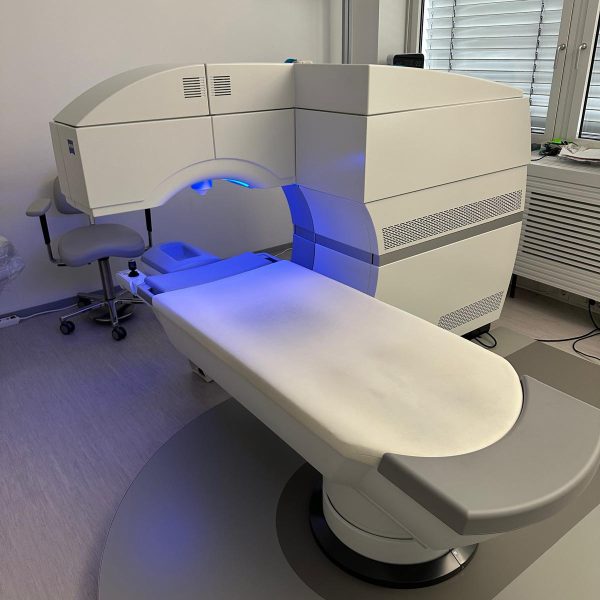
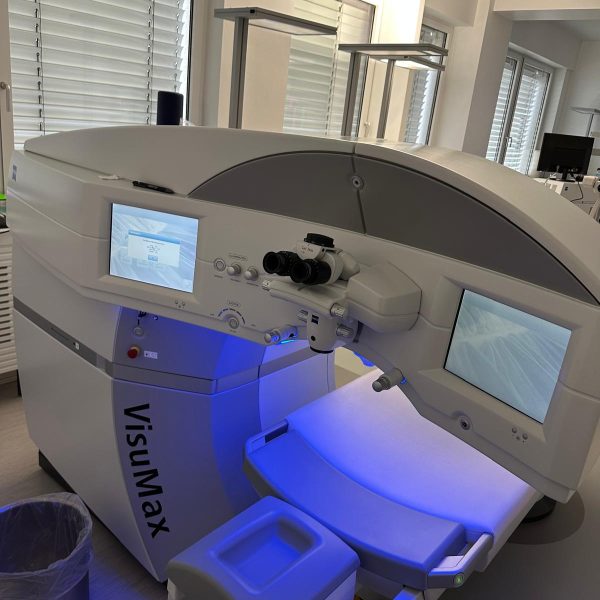
1- Zeiss VisuMax 500
The Zeiss VisuMax 500 is renowned for its advanced technology and ergonomic design. Its primary application lies in performing the SMILE procedure.
Key Features:
- High-speed laser pulses with exceptional precision.
- Gentle treatment for patient comfort.
- Wide range of applications including LASIK and therapeutic procedures.
Advantages:
- Minimal energy consumption per pulse.
- Fast recovery times.
2- Zeiss VisuMax 800
Building on the success of the VisuMax 500, the VisuMax 800 offers enhanced capabilities:
Key Features:
- Faster pulse rates for reduced procedure times.
- Enhanced software for customizable treatments.
- Improved ergonomics for both surgeons and patients.
Advantages:
- High precision in flap creation and lenticule extraction.
- Compatibility with advanced diagnostic systems.
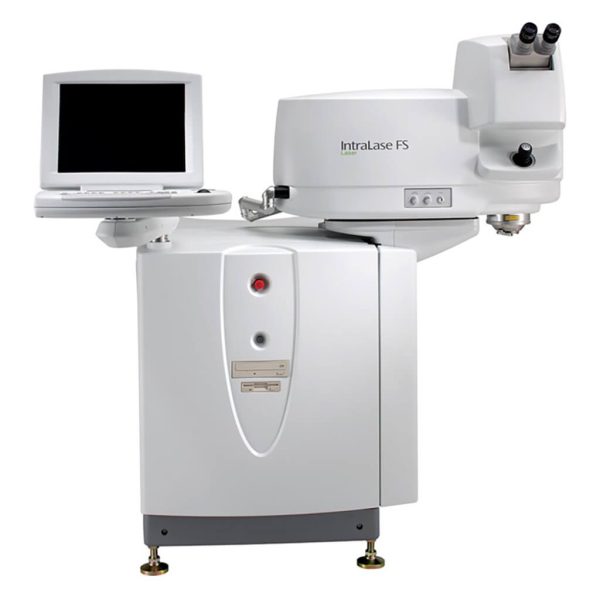
3- Intralase IFS 150
The Intralase IFS 150, developed by Abbott Medical Optics (now part of Johnson & Johnson), is a versatile femtosecond laser widely used for LASIK flap creation.
Key Features:
- Ultra-fast pulse rates for accurate flap creation.
- Customizable flap shapes and hinge positions.
Advantages:
- Reduced risk of flap-related complications.
- High reproducibility and reliability.
4- J&J Elita Femtosecond Laser
Johnson & Johnson’s Elita is a state-of-the-art femtosecond laser system designed for precision and ease of use.
Key Features:
- Advanced optics for superior surgical outcomes.
- User-friendly interface with customizable settings.
Advantages:
- Versatility in refractive and therapeutic applications.
- Robust safety mechanisms.
5- Schwind Atos
The Schwind Atos stands out as a compact and efficient femtosecond laser system.
Key Features:
- High-speed laser delivery for optimized treatment times.
- Integration with Schwind diagnostic devices for seamless workflow.
Advantages:
- Ideal for both refractive and therapeutic applications.
- Low energy settings to preserve tissue integrity.
Comparative Analysis of Leading Femtosecond Lasers
| Laser System | Pulse Speed | Applications | Unique Features |
| Zeiss VisuMax 500 | High | SMILE, LASIK, therapeutic | Gentle treatment, high precision |
| Zeiss VisuMax 800 | Ultra-High | SMILE, LASIK, therapeutic | Faster procedures, customizable, hyperopic treatment |
| Intralase IFS 150 | High | LASIK, therapeutic | Customizable flaps, reliability |
| J&J Elita | High | Refractive, therapeutic | Versatile, safety-focused |
| Schwind Atos | High | Refractive, therapeutic | Compact design, low energy settings |
Choosing the Right Femtosecond Laser
When selecting a femtosecond laser system, ophthalmologists must consider factors such as:
- Clinical Applications: Does the system support the intended procedures (e.g., LASIK, SMILE)?
- Precision and Speed: How does the laser balance accuracy with operational efficiency?
- Patient Comfort: Are procedures gentle and minimally invasive?
- Integration with Diagnostic Tools: Can the system seamlessly connect with diagnostic equipment?
- Cost and Maintenance: What are the upfront and operational costs?
Future of Femtosecond Lasers in Ophthalmology
As technology advances, femtosecond lasers are becoming faster, more precise, and versatile. Innovations like adaptive optics and AI-driven treatment planning are poised to further enhance surgical outcomes. These advancements promise a future where ophthalmic surgeries are not only highly effective but also more accessible globally.
Conclusion
Femtosecond lasers represent the pinnacle of precision in ophthalmic surgery. Systems like the Zeiss VisuMax 500 and VisuMax 800, Intralase IFS 150, J&J Elita, and Schwind Atos exemplify how technology can transform patient care. By understanding their features and applications, ophthalmologists can make informed decisions to improve surgical outcomes and patient satisfaction.

VisuMax 500 Spare Parts: Laser Head & Scanner
Spare Parts for the VisuMax 500 Femtosecond Laser System: Focus on Laser Head and Scanner [...]
Read More
Purchasing Used VisuMax 500: What to Know?
The Importance of Maintenance and Spare Part Support When Buying a Second-Hand VisuMax 500 Femtosecond [...]
Read More
The Smart Choice: Buying Used Refractive Lasers
Why Purchasing Used Refractive Lasers is a Smart Choice Investing in refractive lasers is a [...]
Read More